


Whether you are running a restaurant in the CBD, managing a central kitchen for a hotel group, or distributing pharmaceutical products across the island, reliable frozen storage is not a background consideration. For many businesses, it is the backbone of daily operations, and getting the installation right from the start saves a great deal of time, money, and stress down the road.
This guide walks you through what businesses in Singapore should know before, during, and after a freezer room installation — from site preparation to the choices that affect long-term performance.
Start With Your Operational Needs
Before any contractor comes on site, the most useful thing you can do is map out exactly how your business uses cold storage. How much product do you turn over in a week? What temperature range do you need — chilled, frozen, or a combination of both? How many staff will be accessing the room, and how frequently?
These questions matter because freezer room specifications are not one-size-fits-all. A pharmaceutical distributor storing temperature-sensitive biologics at -20°C has very different requirements from a hotel kitchen storing bulk proteins at -18°C. Getting clarity on your usage patterns early allows your contractor to size the room, select the right refrigeration system, and plan the layout accordingly rather than building something that works on paper but creates bottlenecks in practice.
Singapore imports more than 90% of its food supply. For F&B businesses especially, this means reliable cold storage is directly tied to food security and supply chain continuity, not just convenience.
Site Assessment and Space Planning
Once your requirements are clear, a proper site assessment comes next. Your contractor will need to evaluate the structural integrity of the floor (freezer rooms are heavy), ceiling height, ventilation around the condensing unit, proximity to heat sources, and access points for loading and unloading.
In Singapore’s commercial landscape, where many businesses operate in shophouses, food factories, or multi-tenant industrial buildings, space constraints are common. This is where working with an experienced contractor pays off, as good planning can often achieve more than a larger footprint would suggest. Compact layouts with well-positioned racking, proper door placement, and sensible zoning can make a modestly sized room perform like a much larger one.
Choosing the Right Components
A freezer room is not just four insulated walls. The major components that determine performance and longevity include:
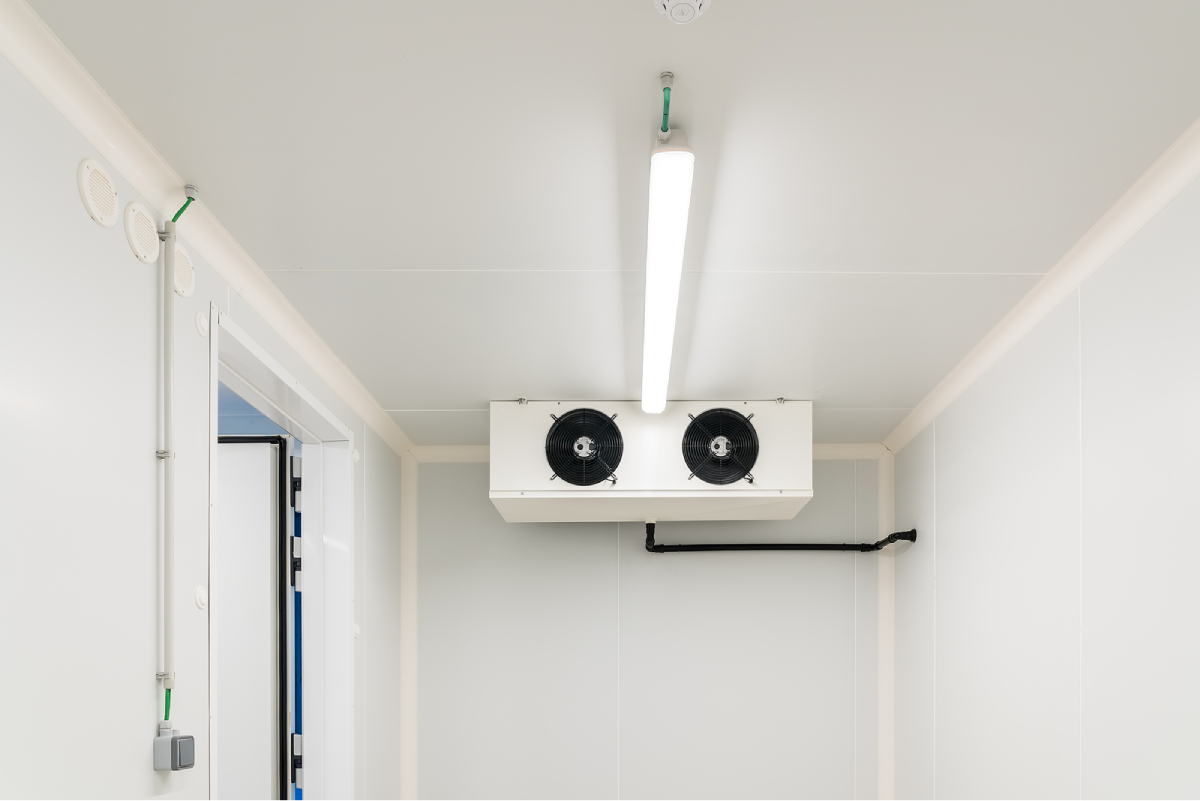
- Insulated panels: These form the shell of the room and must be suited to your target temperature. Panels for deep-freeze applications (typically -18°C to -25°C) require greater thickness than those used for chilled storage.
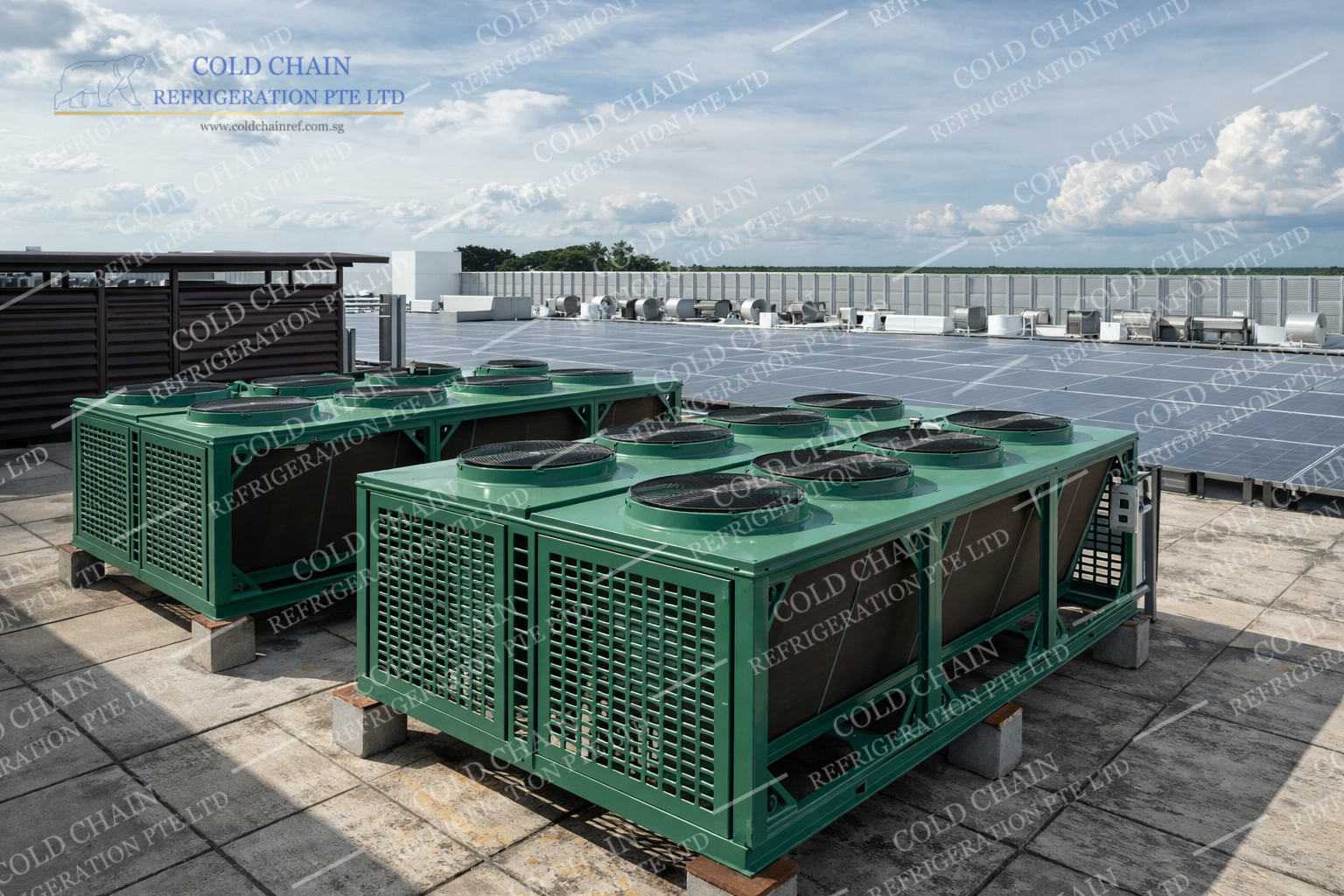
- Refrigeration unit: The compressor and evaporator combination must be correctly matched to the room volume and expected heat load. Undersizing leads to the unit overworking; oversizing wastes energy and can cause humidity issues.
- Flooring: Insulated flooring is essential in freezer rooms to prevent cold bridging and condensation on the slab beneath — a detail sometimes overlooked that can cause long-term structural and hygiene problems.
- Doors and seals: Heavy-traffic operations benefit from faster-action doors or strip curtains to minimise temperature fluctuation during access. Seal integrity should be inspected regularly.
- Monitoring systems: Automated temperature logging and alert systems are increasingly standard, particularly for businesses with regulatory obligations under HSA guidelines for pharmaceutical cold chain or SFA requirements for food safety.
The Installation Process
A typical freezer room installation follows a logical sequence: site preparation and waterproofing, panel assembly, refrigeration pipework and electrical connections, commissioning, and finally temperature stabilisation before the room is loaded with product.
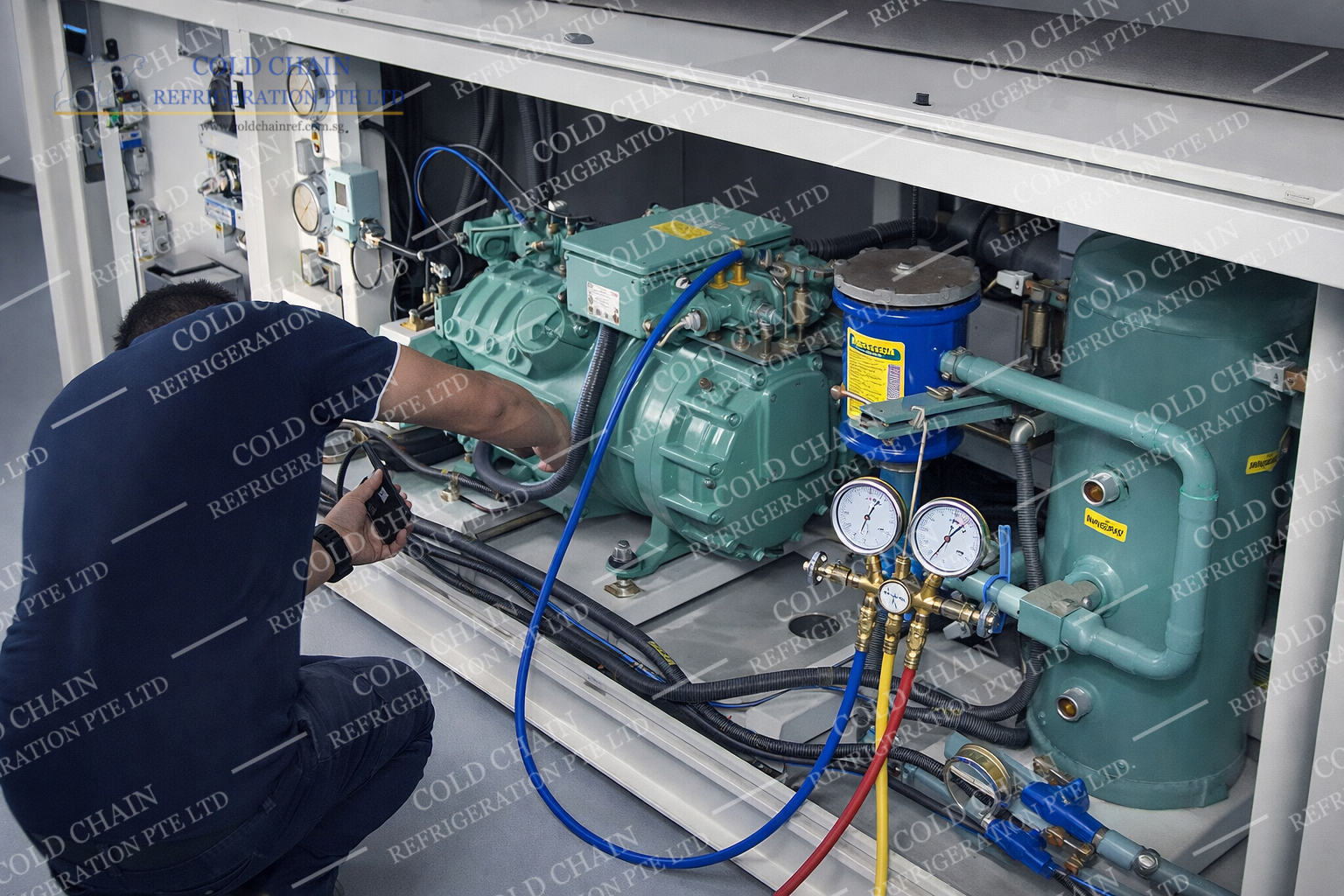
The commissioning phase is often where corners get cut, and this is where problems begin. A properly commissioned system should be allowed to reach and hold its target temperature consistently without product inside before it is put into service. This also gives the installer the opportunity to identify any insulation gaps, door alignment issues, or refrigerant leaks before they become operational headaches.
If your business is also considering how cold room design differs across food, pharma, and logistics applications, it is worth reviewing those distinctions before finalising your specifications.
Regulatory Considerations in Singapore
Depending on your industry and building type, there may be regulatory requirements to factor in. Food businesses operating under SFA licences are expected to maintain proper temperature control for frozen products, with records available for inspection. Pharmaceutical businesses follow HSA’s Good Distribution Practice (GDP) guidelines, which include specific requirements around temperature mapping, qualified monitoring systems, and deviation management.
For businesses in JTC or HDB industrial estates, there may also be building-specific requirements around plant room locations, drainage, and electrical load that need to be coordinated with the relevant authority before installation begins.
After Installation: Ongoing Performance
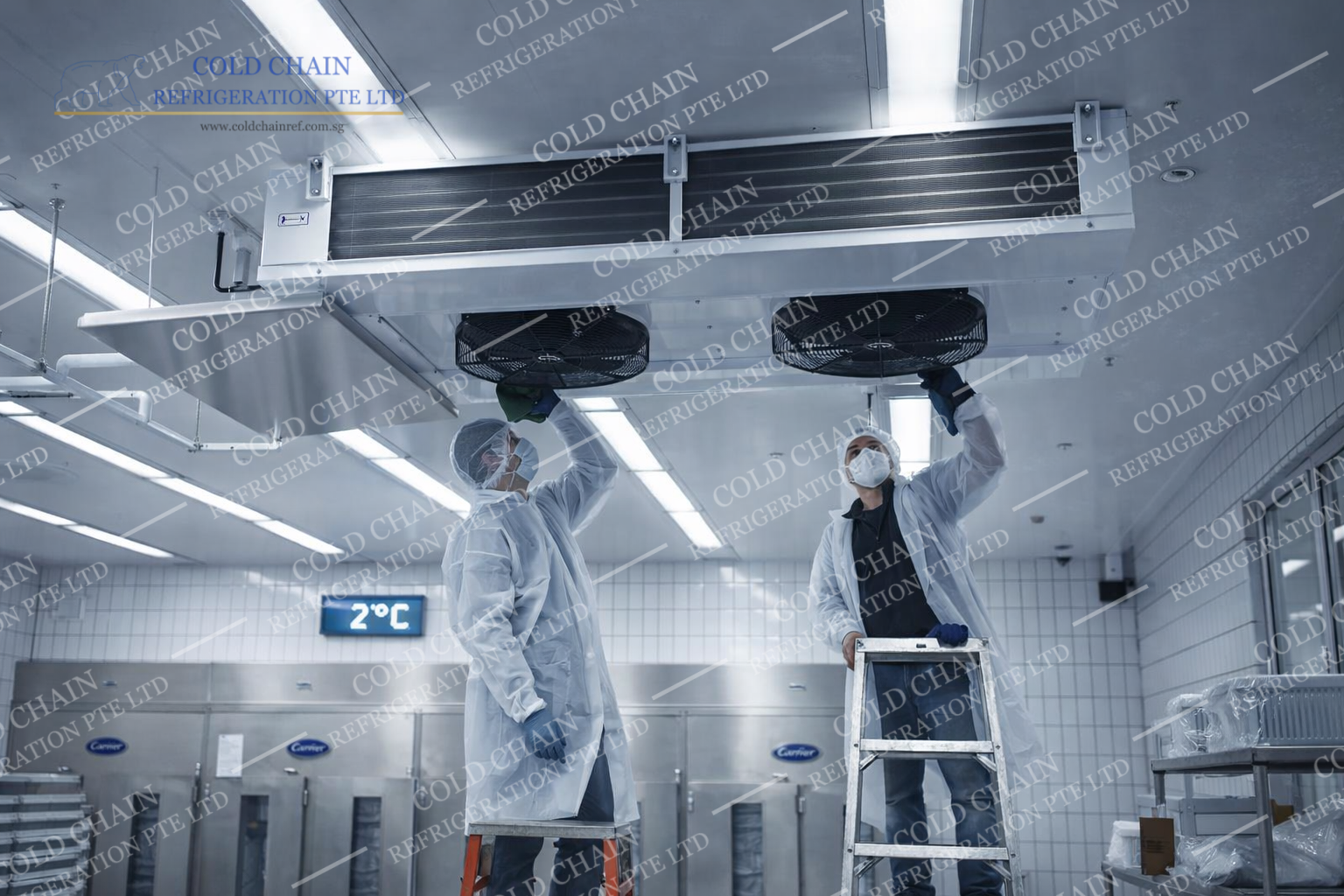
The installation itself is only the beginning. Freezer rooms require regular maintenance — condenser coil cleaning, gasket checks, defrost cycle verification, and refrigerant level monitoring — to perform reliably over the years. Businesses that treat maintenance as an afterthought tend to face higher repair costs, shorter equipment lifespans, and the very real risk of unexpected downtime during peak operational periods.
Establishing a planned maintenance schedule with your installer from day one is a straightforward way to protect your investment and keep your operations running without interruption.
A Practical Next Step
Getting a freezer room right is a matter of planning, choosing the right partners, and understanding that the decisions made during installation have consequences that play out over years of daily use. For businesses across food service, hospitality, logistics, and healthcare, the stakes around cold storage are high enough that doing it properly the first time is always the better approach.
To discuss your requirements or get a professional assessment for your space, get in touch with Cold Chain Refrigeration. We are a Singapore-based specialist with hands-on experience across a wide range of commercial and industrial cold storage projects, and we work with businesses to build cold storage solutions that hold up well beyond day one.