


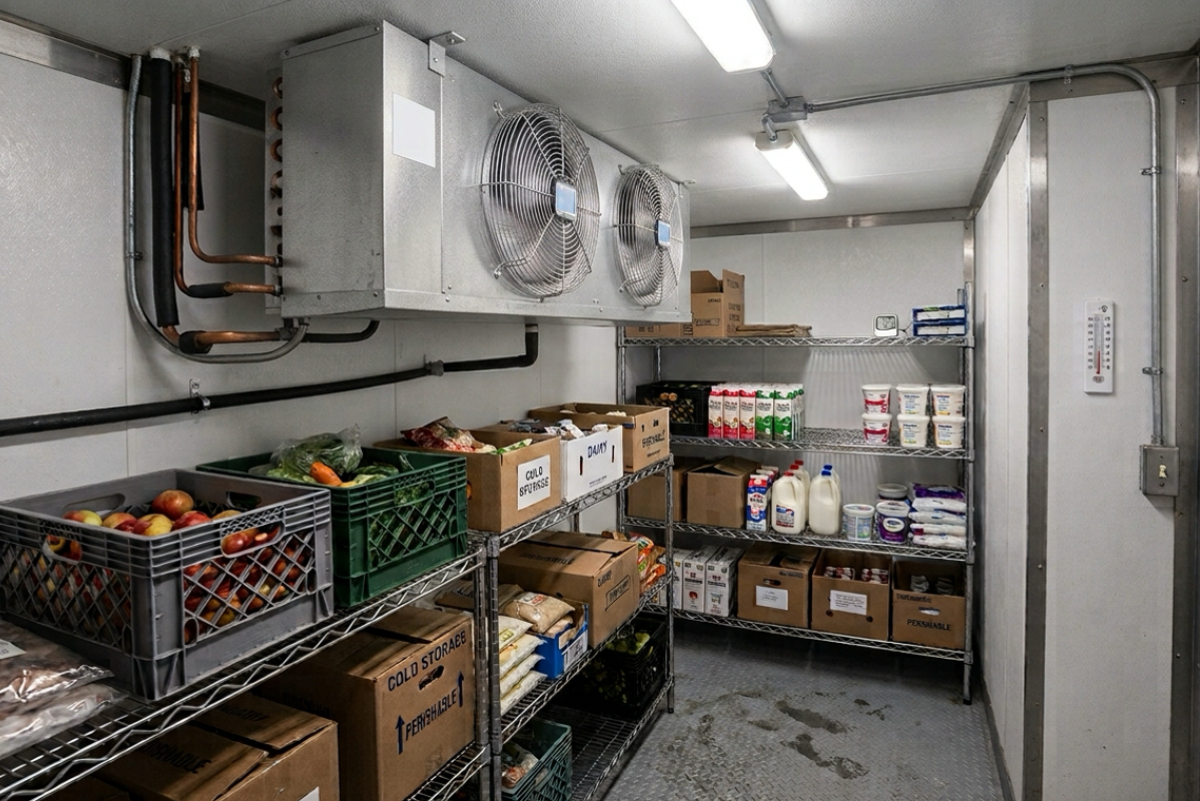
A new retail lease rarely comes with a freezer room already fitted, and the decision that follows can shape a business’s finances for years. Buy outright and commit real capital upfront, or lease equipment and keep cash free for stock, staff and shopfitting instead. Neither answer is universally right, and the better choice depends heavily on how long you plan to stay put and how fast your stock volumes are likely to grow.
For retailers and wholesalers weighing this decision, understanding what actually changes between renting and buying a walk-in freezer helps avoid a costly mismatch between the equipment and the business it is meant to serve.
What GWP Actually Means
GWP, or global warming potential, measures how much heat a gas traps in the atmosphere compared with carbon dioxide over a set period. Carbon dioxide has a GWP of one, while many older refrigerants sit in the thousands. A refrigerant described as low-GWP simply has a far smaller climate impact if it leaks or is released at end of life.
Common low-GWP options include natural refrigerants such as CO₂ (R744), ammonia (R717) and certain hydrocarbons, alongside newer synthetic blends known as HFOs. Each brings its own strengths and trade-offs around efficiency, safety and system design, which is why the right choice depends heavily on the application.
The Basic Trade-Off
Buying a walk-in freezer means a larger upfront cost, full ownership, and the freedom to configure the room however suits your operation. Renting spreads the cost over time, usually with servicing bundled in, in exchange for less flexibility and, over a long enough period, a higher total spend.
Retailers often assume renting is automatically cheaper because the monthly figure looks smaller on paper. That is not always true once several years of payments are added up against a one-time purchase price.
When Renting Tends to Make Sense
Renting suits businesses that are still finding their footing or expect their storage needs to change soon. A pop-up store, a seasonal retailer, or a business testing a new product category before committing to a permanent build-out all fall into this category.
Retail leases in Singapore are often shorter than the useful life of a freezer room, and a business unsure whether it will renew at the same site may prefer not to own equipment it cannot easily relocate. Renting also usually includes servicing as part of the package, which removes one operational headache from a lean team.
The trade-off is that rental payments continue indefinitely, and the equipment never becomes an asset on the books. Over five or ten years, that can add up to considerably more than a purchase would have cost.
When Buying Tends to Make Sense
For an established retailer with a long lease or owned premises, buying usually works out better in the long run. Ownership means no ongoing rental payments, full control over the room’s specification, and an asset that can be depreciated for tax purposes.
Buying also removes any restrictions a rental agreement might place on modifications, relocations or expansions. A growing wholesale operation that expects to add more storage within a few years often benefits from designing a custom system from the outset, instead of working around a standard rented unit that may not scale well.
The obvious downside is the upfront cost, which can be a genuine barrier for a smaller or newer business. Financing options exist to soften this, though they add their own interest cost to the equation, and that cost deserves a direct comparison against the total a rental agreement would charge over the same period.
Some retailers land on a middle path, financing the purchase through a bank loan or equipment financing scheme rather than paying the full amount upfront. This keeps ownership and its long-term savings while spreading the cash outflow closer to what a rental arrangement would demand month to month.
Costs Beyond the Headline Number
Whichever route a business takes, several costs sit underneath the sticker price and deserve attention before signing anything.
- Installation and any structural work needed to fit the unit into the space.
- Ongoing energy consumption, which varies significantly between older and newer refrigeration systems.
- Servicing and maintenance, whether bundled into a rental or arranged separately for an owned unit.
- Removal or relocation costs, which apply if a rented unit needs to move or a purchased one is no longer needed.
Retailers who compare only the headline rental fee against the headline purchase price often miss one of these, and end up with a less accurate picture of which option truly costs less.
A Question of Timeline, Not Just Budget
The rent-or-buy decision often comes down to how long a business expects to stay in its current form and location. A retailer signing a two-year lease with an uncertain renewal has a very different calculation from a wholesaler that owns its warehouse outright and plans to operate there for a decade.
The decision also deserves a periodic second look, rather than being treated as fixed once made. A business that started out renting because cash was tight may reach a point where buying makes clear financial sense, particularly once storage needs have stabilised and growth plans are firmer. Larger grocery formats show how directly supermarkets benefit from walk-in refrigeration once volumes justify dedicated capacity, and smaller retailers often reach that same threshold sooner than they expect.
Getting Advice Before Committing Either Way
Because the right answer depends so heavily on individual circumstances, a proper assessment before committing to either path pays for itself many times over. A specialist can model the real costs of both options against your specific volume, lease length and growth plans, instead of leaving the decision to a rough guess.
Cold Chain Refrigeration works with retailers and wholesalers across Singapore to design, supply and maintain freezer rooms suited to their trading pattern, whether that means a flexible rented unit or a custom-built system designed to last. Speak with our team to work out which option fits your business best.