


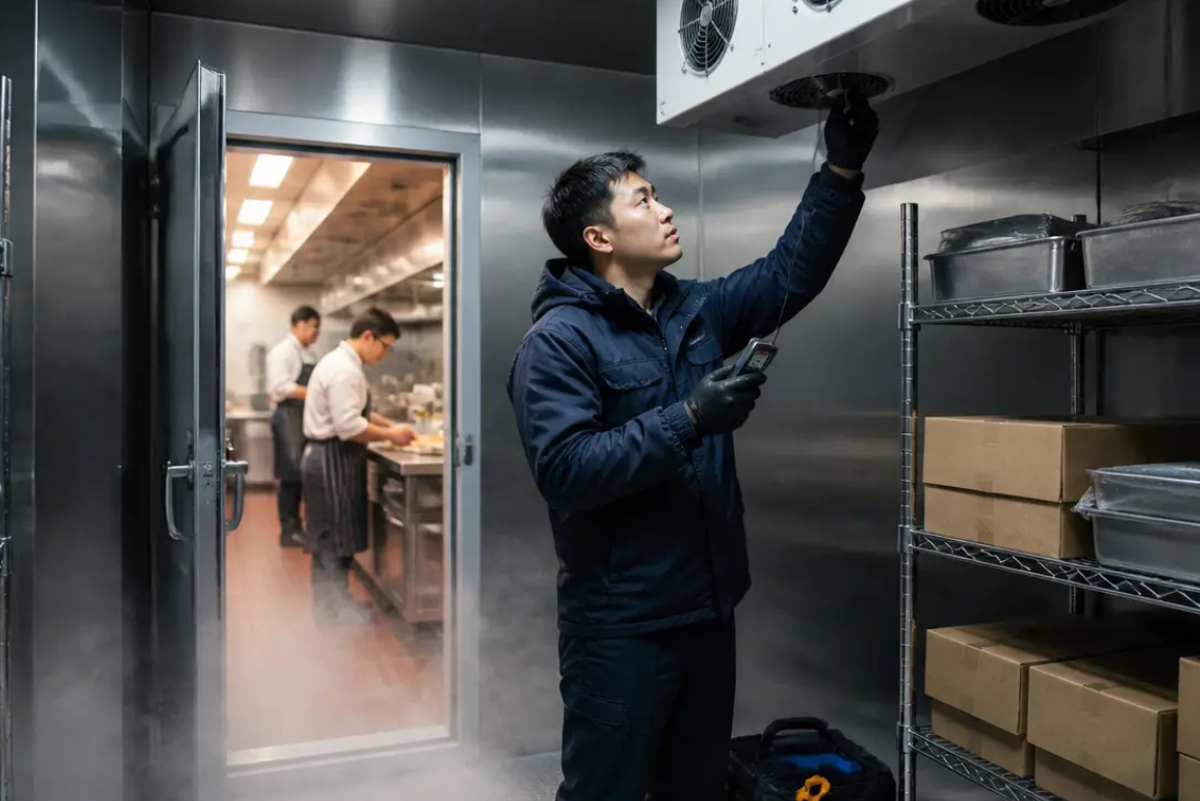
A hotel kitchen rarely has a quiet moment. Breakfast service overlaps with lunch prep, banquets demand sudden bursts of stock, and the walk-in door swings open every few minutes from dawn until well past midnight. Cold storage in this setting works harder than almost anywhere else in the building, yet it is often the last thing anyone checks until something goes visibly wrong.
By the time a chef notices the room feels warm, the problem has usually been building for weeks. Catching the early signs of trouble, and booking cold room servicing before a full breakdown, protects both food safety and the kitchen’s ability to keep service running without interruption.
Why Hotel Kitchens Are Especially Hard on Cold Rooms
Few environments cycle a cold room as hard as hospitality does. Deliveries arrive at odd hours, service periods bring constant door traffic, and banquet events can double normal stock levels overnight. Each of these adds thermal load that a domestic-style fridge was never designed to absorb.
Humidity adds another layer of strain. Steam from nearby kitchen equipment, combined with Singapore’s already warm, moist air, pushes evaporator coils to work harder and ice up faster than they would in a drier setting. Over time, that extra strain shortens the life of components that would otherwise last for years.
The Early Warning Signs to Watch For
Most cold room failures do not happen suddenly. They build gradually, and a few consistent signs tend to appear well before a full breakdown.
- The compressor runs almost continuously instead of cycling on and off as it should.
- Ice builds up on the evaporator coil, walls or door frame faster than it used to.
- Stock near the door feels noticeably warmer than stock stored deeper inside the room.
- Energy bills creep upward without any change in how the kitchen uses the space.
- Staff report the room “feels different” even though the thermostat reading looks normal.
- Doors take extra force to close, or no longer seal flush against the frame.
Any one of these alone might be nothing. Two or three appearing together is usually a sign that servicing should happen soon, not whenever the schedule allows.
What Happens During a Proper Servicing Visit
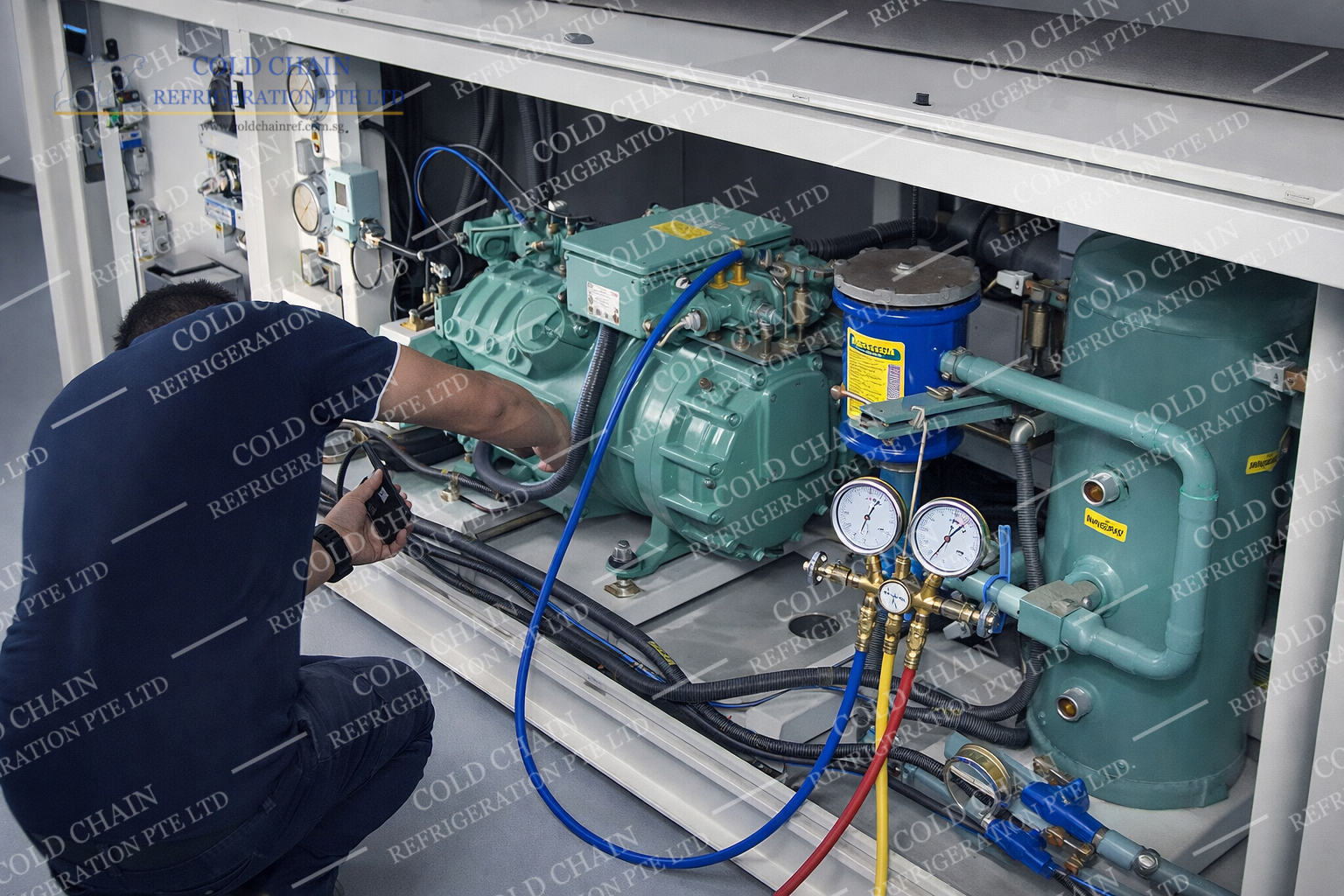
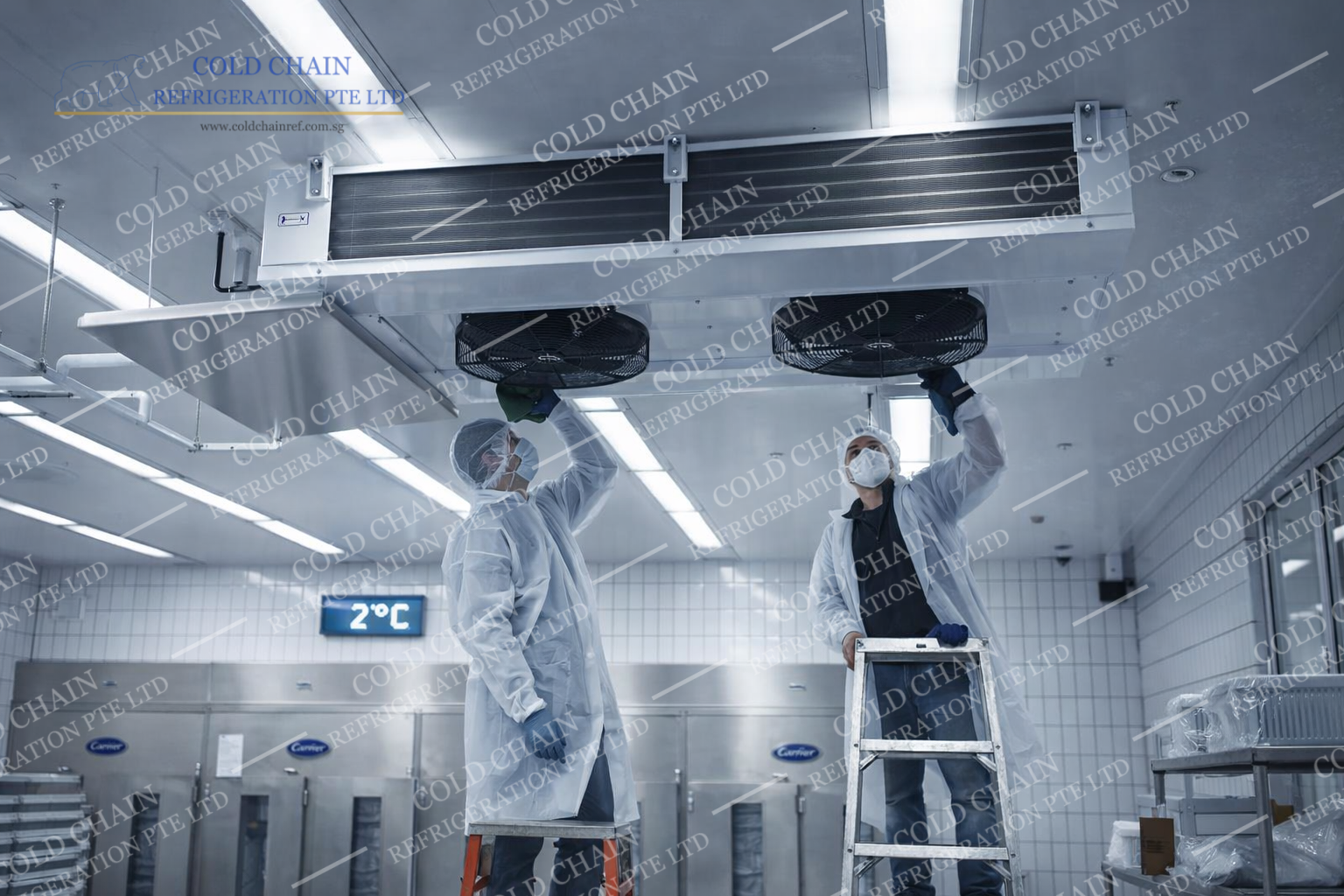
A thorough servicing visit covers more ground than most kitchen staff expect. Technicians check refrigerant levels, inspect door seals and hinges, clean condenser coils, and test that the thermostat and controls are reading accurately instead of drifting from actual conditions inside the room.
Drainage and defrost cycles get attention too, since a blocked drain line is one of the more common causes of sudden ice build-up and water pooling on the floor. Catching this early avoids both a safety hazard and a service call that could have been scheduled calmly in advance.
For a busy hotel kitchen, timing servicing around quieter periods, rather than waiting for an emergency during a fully booked banquet weekend, makes the whole process far less disruptive.
The Cost of Delaying Servicing
Deferred maintenance rarely saves money in hospitality. A compressor pushed past its limits draws more power for less cooling, and a room running warm even by a couple of degrees accelerates spoilage across everything stored inside it.
There is a reputational cost too. A kitchen that runs short on stock mid-service, or has to explain a food safety issue to a guest, absorbs damage that a modest servicing bill would have prevented entirely. Insurance and food safety audits also tend to look more favourably on kitchens with a documented, regular servicing history.
Replacement equipment brought in under emergency conditions tends to cost more as well. Suppliers know a same-day request carries little room to negotiate, and a rushed installation leaves less time to size the replacement properly for the kitchen’s actual workload.
Building Servicing Into the Kitchen Calendar
The kitchens that avoid emergency call-outs tend to treat servicing as a fixed part of their operating calendar, not an afterthought. Scheduling a check before peak seasons such as festive banquets or major conference bookings gives technicians time to fix small issues before volume climbs.
Larger hotels running several cold rooms across different outlets often benefit from a single maintenance contract covering all of them, so nothing gets missed simply because responsibility sits across different teams. This kind of forward planning mirrors what we cover in our guide on how caterers can plan for cold storage needs around event volume, since hotel banquet kitchens face very similar seasonal spikes.
A property with a central engineering team can usually coordinate this without much extra effort. A standalone restaurant or boutique hotel, with no in-house technician on staff, tends to benefit more from an external contractor who already knows the equipment and can respond quickly when something changes.
Even a modest checklist, reviewed monthly by kitchen staff, can flag small issues long before they escalate into a call-out during a fully booked weekend.
Keep Service Running Smoothly
A hotel kitchen depends on its cold storage working quietly in the background, every hour of every service. Recognising the early signs of a struggling system, and acting on them promptly, keeps that dependability intact.
Cold Chain Refrigeration provides servicing and maintenance support built around the demands of hospitality kitchens, including flexible scheduling around your busiest periods. If your walk-in has been showing any of the signs above, our team is ready to take a look before a small issue becomes a service disruption.