


A conventional refrigeration compressor knows two states, fully on and fully off. Every time it starts it draws a heavy inrush of current, drives the room several degrees past the setpoint, then stops until the temperature drifts back up. Operators have absorbed that cost for decades because there was no practical alternative at cold room scale.
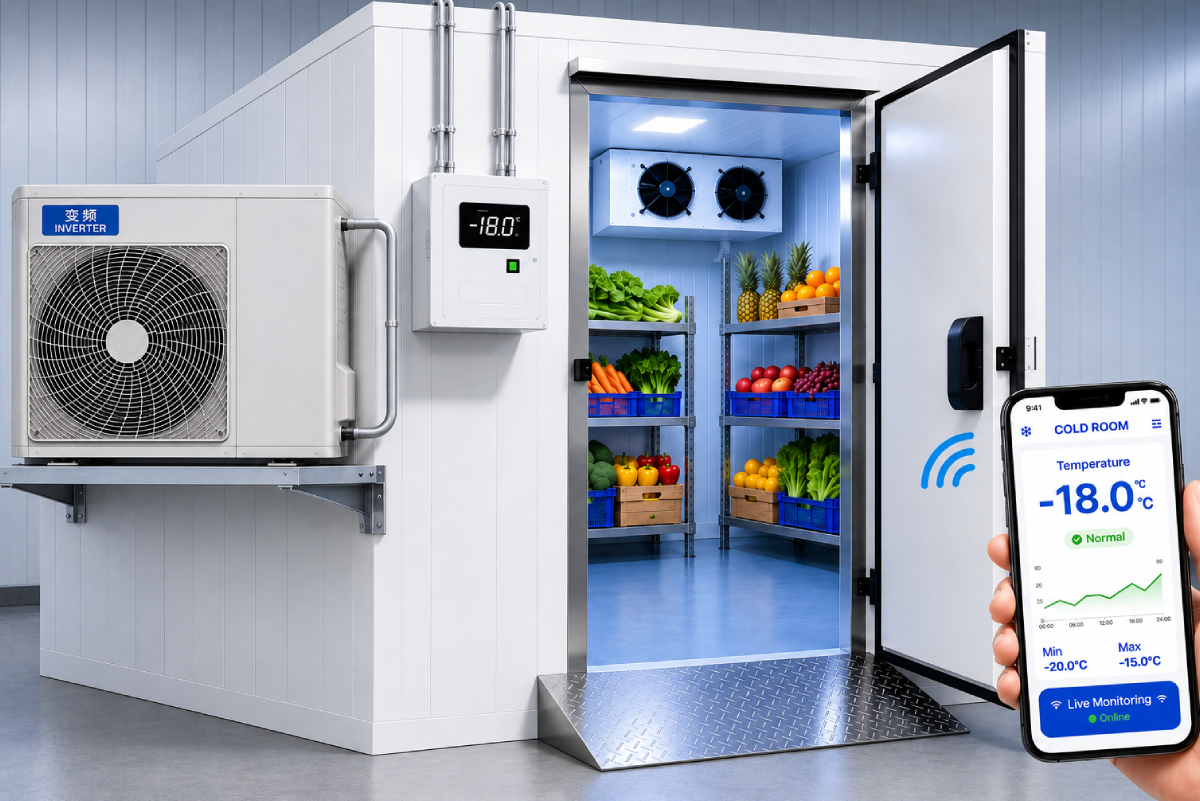
Cold Chain Refrigeration has introduced an inverter system cold room built around variable-speed compressor control, available for both walk-in chillers and walk-in freezers. The package brings together an inverter condensing unit, a matched evaporator and an inverter controller, and is designed to reduce energy consumption by up to 30 per cent while holding a tighter temperature band than a conventional fixed-speed commercial cold room.
A Matched Three-Part System
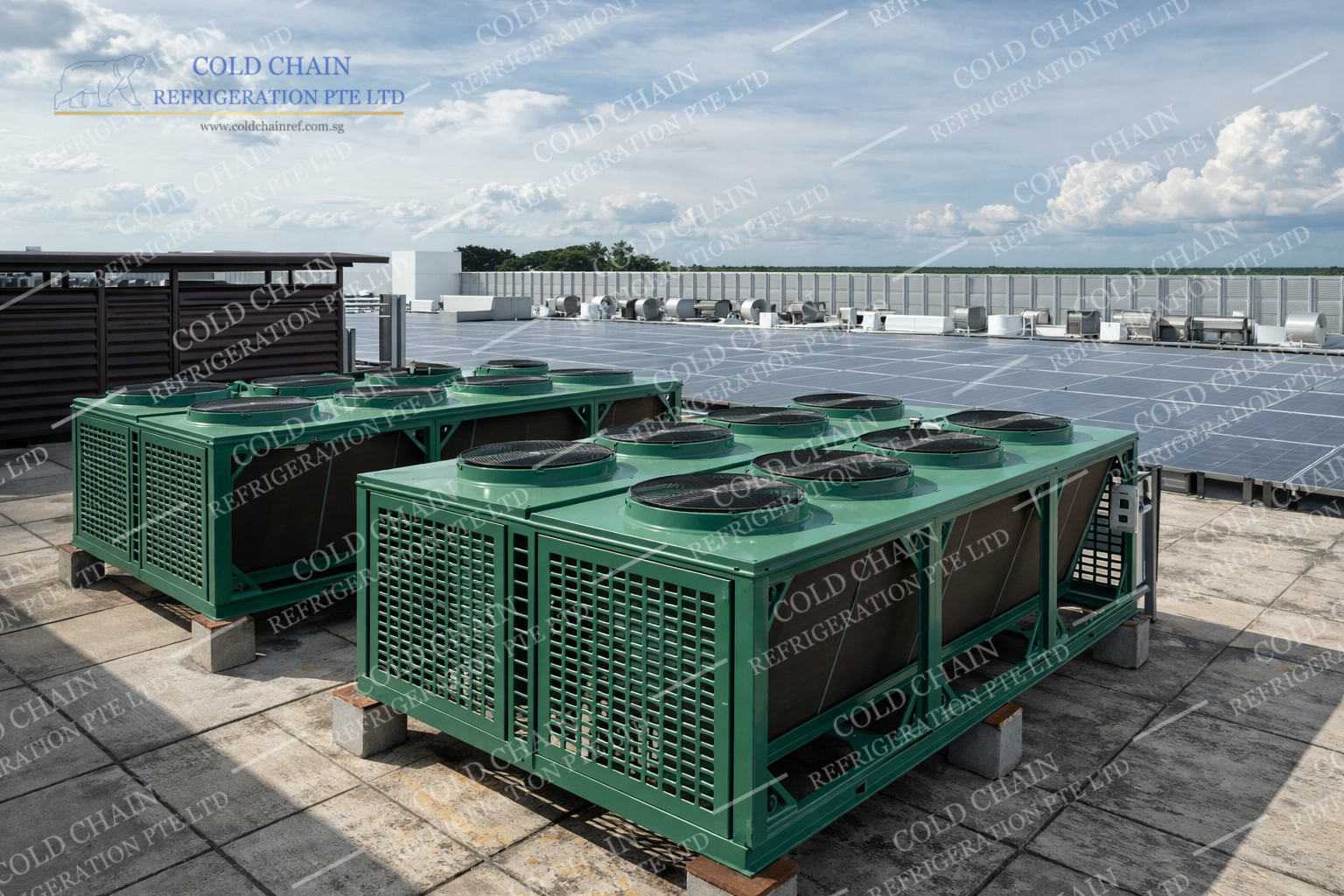
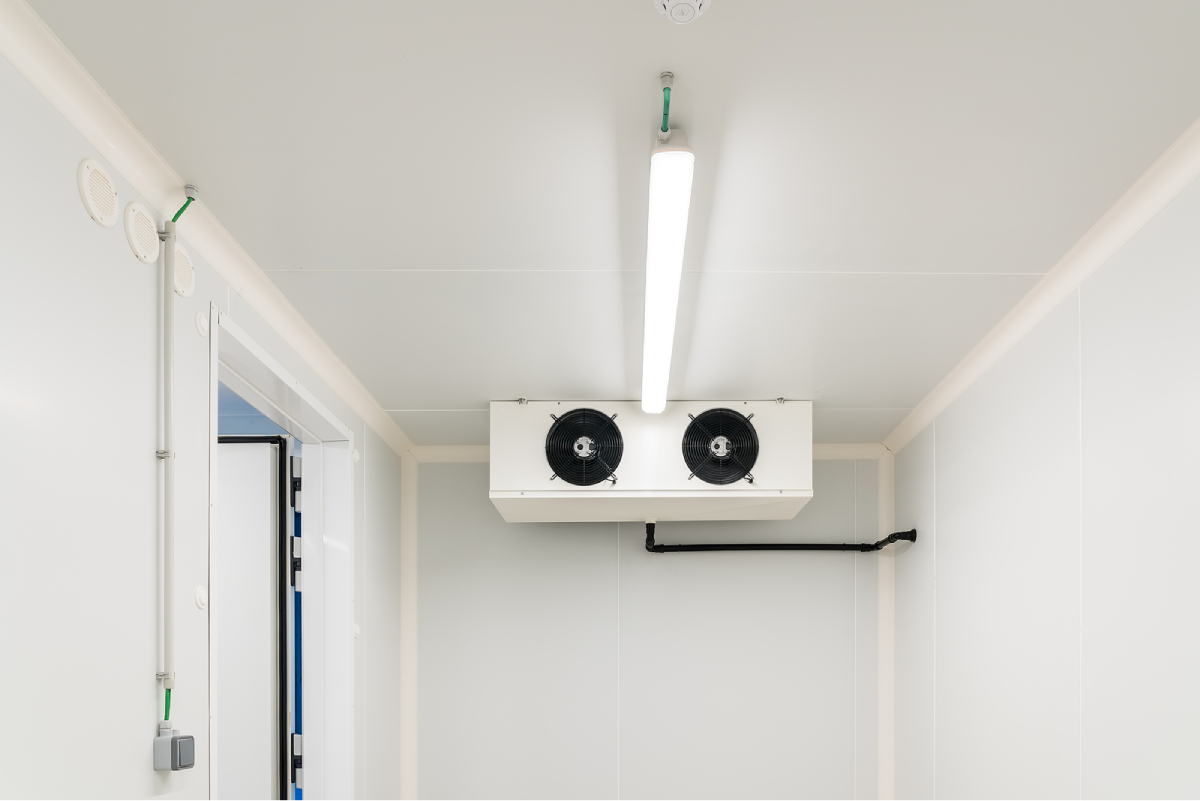
Each installation is supplied as three components engineered to work together. The inverter condensing unit houses the variable-speed compressor and the drive that governs it. The evaporator, sized to the room and its expected load, does the cooling. The inverter controller sits between them, reading conditions inside the room and instructing the compressor to run at whatever capacity the load calls for.
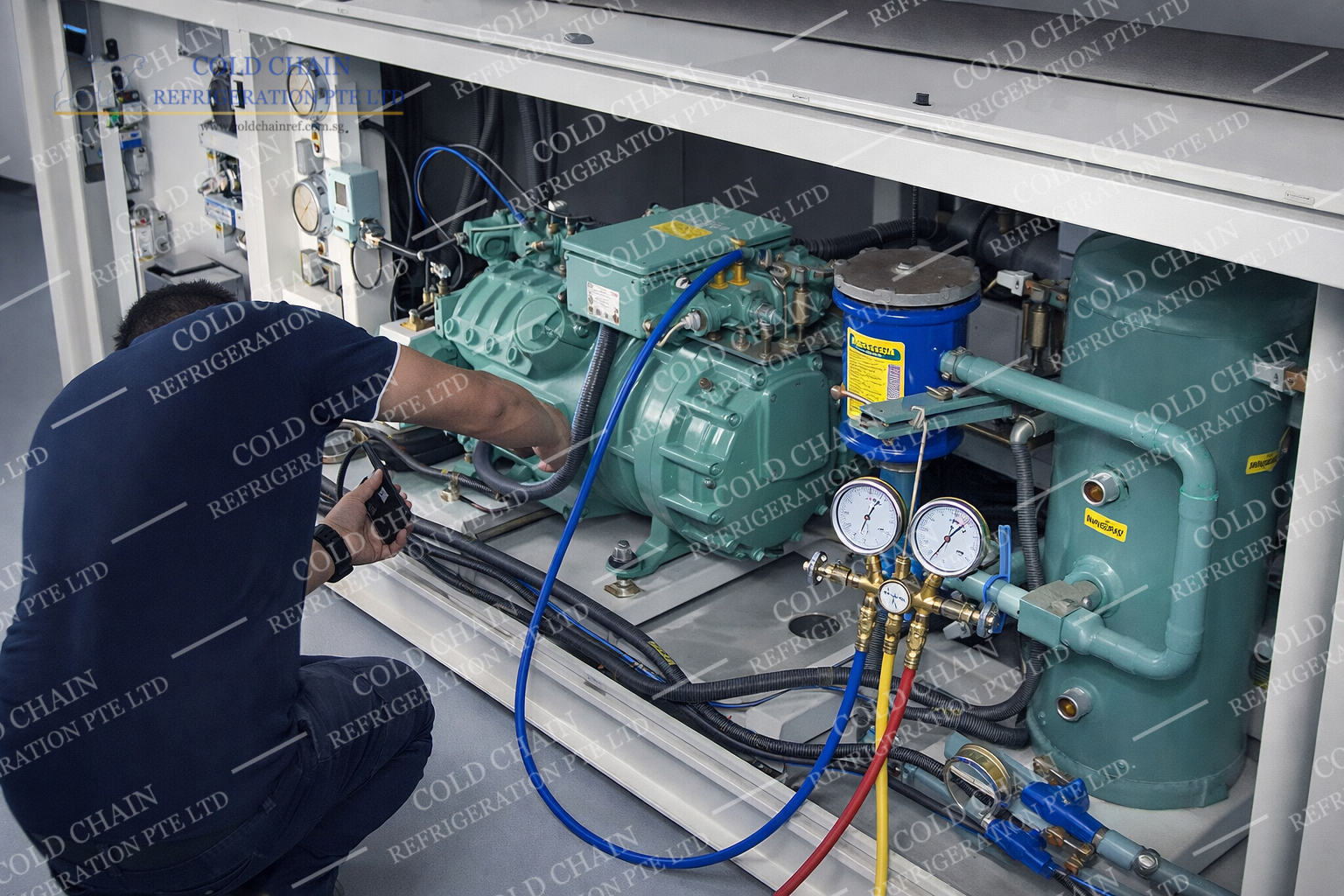
Specifying the three together is what produces the efficiency gain. A variable-speed compressor paired with an undersized evaporator or a basic mechanical thermostat cannot modulate properly, so we supply and commission the package as a single system on new builds and on retrofits to existing rooms.
Up to 30 Per Cent Less Energy Consumption
The saving comes from how the system behaves between calls for cooling. A variable frequency drive alters the supply frequency reaching the compressor motor, allowing output to scale smoothly instead of switching between full capacity and nothing. An electronic expansion valve meters refrigerant into the evaporator continuously to hold a stable superheat, keeping the coil fully wetted so the whole heat exchange surface stays productive.
That behaviour is valuable because cold rooms almost never run at design load. Capacity is sized for the worst case, usually peak ambient conditions coinciding with a full pull-down of warm incoming product. For most operating hours, the load sits well below that figure, and a fixed-speed machine cannot exploit the gap. A modulating compressor spends its life at part load, where it draws disproportionately less power, and soft-starting through the drive removes the repeated inrush of a direct-on-line start.
Savings compound with the rest of the installation, so panel insulation, door discipline and condenser cleanliness all shape the load the compressor sees, and the practices that maximise efficiency in your cold room apply here as much as to conventional equipment.
Precise and Stable Temperature
Because the compressor modulates instead of cycling, the room holds a narrow band rather than sawtoothing between cut-in and cut-out. A chiller kept steady around -2 to 4°C protects fresh produce and dairy from the quality loss caused by repeated warming and re-cooling, while a freezer sitting close to -18°C without cyclical swings limits moisture migration and the ice crystal growth behind freezer burn. For pharmaceutical storage, where excursion limits are written into standard operating procedures, a tighter band also means fewer alarm events to investigate and document.
Remote Monitoring from a Phone or a Desktop
Every unit ships with an IoT module and a standard GPRS connection, so the system reports to a cloud platform reachable from a mobile application or a PC terminal. Host and slave units are grouped on one screen, which lets a multi-room facility be reviewed at a glance. Operators can switch a unit on or off remotely and adjust the storage temperature and differential without sending anyone into the room. Around twenty sets of live data are available, among them:
- Current room temperature against the configured setpoint
- Evaporating and condensing temperatures
- Suction and discharge pressures
- Compressor running current and inverter frequency
- Defrost cycle count and duration
- Cumulative run hours and door-open events
Fault diagnosis and reporting run continuously, so alarms arrive as they occur instead of being discovered the following morning. A notification pushed to a phone at 2 am turns a potential stock write-off into a service call, and the same data gives our engineers a clear picture of unit status before anyone is dispatched to site.
Advanced Defrost and Longer Equipment Life
The system uses a four-way reversing valve arrangement to deliver hot gas defrost. Diverting discharge gas through the evaporator clears frost from the inside out, which works faster than an electric element and removes a substantial resistive load from the electrical supply. Shorter defrost cycles also dump less heat into the room, so the recovery period afterwards is shorter and the product sees less thermal disturbance.
Running at part load instead of full speed also makes the plant noticeably quieter, a practical consideration for units installed near kitchens, service corridors or neighbouring tenancies.
Compressors fail disproportionately at start-up, and a machine that starts a handful of times a day instead of several hundred accumulates far less stress on its windings and bearings. That translates into longer equipment life and steadier performance, provided a scheduled cold room maintenance regime covering coil cleanliness and refrigerant charge stays in place.
Applications Across Chillers and Freezers
The same platform is configured for positive and negative temperature rooms, so a single site can run both on consistent controls. Typical applications include:
- Food and beverage: central kitchens, hotel kitchens, supermarkets and food processors handling daily deliveries
- Pharmaceutical: temperature-controlled storage with documented excursion limits and audit requirements
- Hospitality and retail: back-of-house chillers and freezers subject to heavy door traffic
- Logistics and warehousing: bulk frozen storage and cross-dock holding where load varies through the day
Conclusion
Variable-speed control and remote visibility have shifted from premium extras to the sensible specification for most new chiller and freezer installations. Lower running costs and a longer service life follow from the same design decision, with quieter operation as a by-product, and the monitoring platform gives operators a level of oversight that conventional equipment does not offer.
Cold Chain Refrigeration designs and installs walk-in chillers and freezers for businesses across Singapore, backed by 24/7 service and maintenance. To discuss whether this platform suits your site conditions and load profile, or to arrange a site assessment, reach out to our team.