


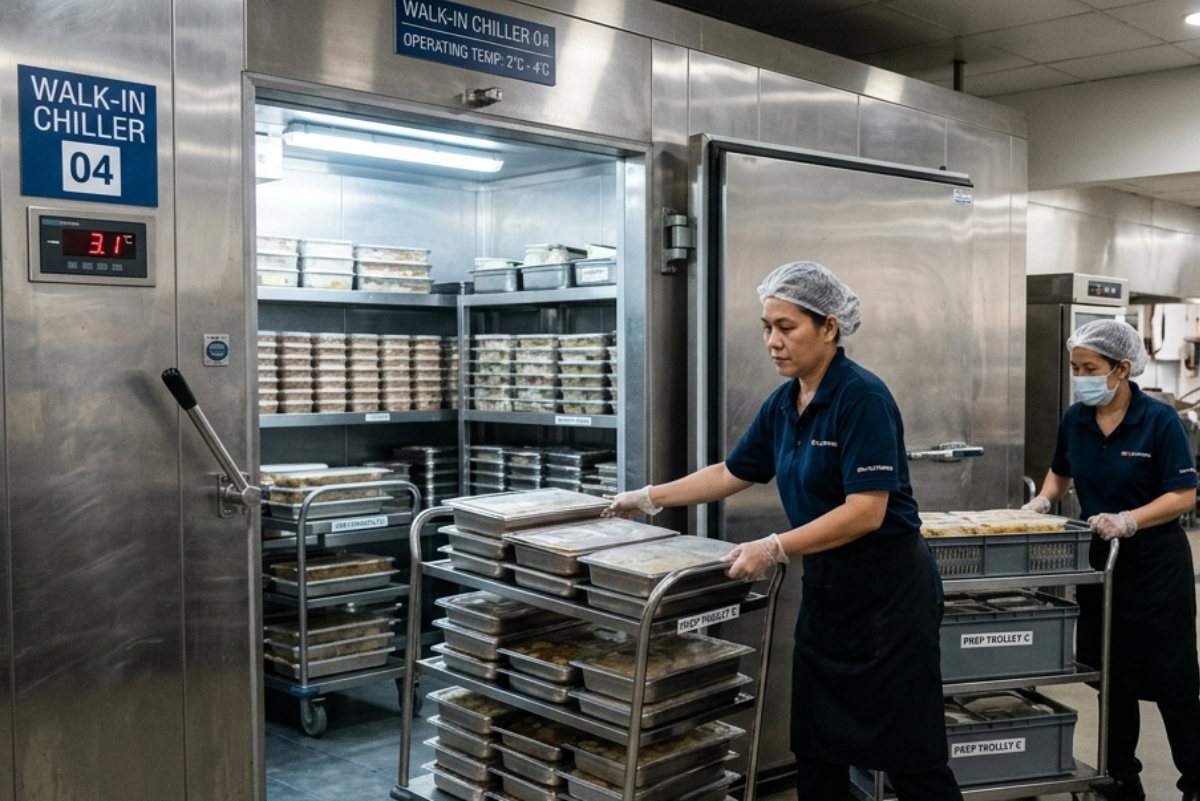
Event catering is a business built on precision. Every dish that reaches a guest has passed through a chain of preparation, portioning, chilling and transport, and any weak link in that chain affects the final result. Cold storage sits at the centre of that chain, and for caterers managing large volumes across multiple events, getting it right is one of the more consequential operational decisions they will make.
Whether you are catering for a corporate dinner, a wedding reception or a large-scale public event, the cold storage decisions you make beforehand determine how smoothly everything runs on the day.
Let your volume guide the planning
The most common planning mistake caterers make is focusing on cold storage based on the equipment they currently have, rather than on what a specific event actually requires. Two events with the same guest count can have entirely different cold storage needs depending on the menu, prep timeline, and venue.
A sit-down dinner with a multi-course menu requires chilled storage for proteins, dairy-based sauces and pre-plated desserts at different stages of preparation. A buffet for the same number of guests might require more bulk cold storage upfront but less precision at the point of service. Working backwards from your menu is a more reliable way to size your cold storage requirement than working forwards from your existing setup.
Start by mapping out every ingredient that requires temperature control and the stage of preparation at which it needs to be chilled or frozen. Factor in the prep schedule, delivery windows and how long food will be held at the venue before service. This kind of planning reveals gaps that are easy to miss when you are focused on the cooking side of the operation.
Understanding temperature requirements across your menu
Not all cold storage needs are the same, and different products within the same menu may require different temperature ranges. Raw proteins typically need to be held at 0°C to 4°C. Pre-cooked items that will be reheated on site can often be chilled within the same range, but frozen pre-prepared components require a walk in freezer held at -18°C or below.
Running different products at the same temperature when they require different conditions is a risk that increases with event scale. Larger operations often find that a single cold room or refrigerated unit creates bottlenecks during peak prep periods and makes it harder to maintain proper product segregation. Planning separate zones or units by product type is a practical approach that also reduces the risk of cross-contamination.
For caterers who operate from a central kitchen, reviewing whether your existing cold storage infrastructure can actually support your peak event load is a useful exercise before committing to a contract. An overloaded cold room that struggles to recover temperature after repeated door openings during prep is a food safety liability.
Temporary cold storage for off-site events
Many of Singapore’s most demanding catering jobs happen at venues with limited or no on-site cold storage, from outdoor marquee events and pop-up dining experiences to hotel ballrooms where kitchen access is shared or restricted. In these situations, caterers need to plan for temporary cold storage well in advance.
Refrigerated transport vehicles play a role here, but they are a means of getting food to the venue and not a substitute for proper cold storage at the event itself. For events that span several hours and include multiple service periods, having a dedicated cold-holding solution on-site is an operational necessity. This might be a rented refrigerated unit, a cold room installed temporarily, or a carefully planned logistics schedule that minimises the time food spends outside controlled temperature conditions.
The Singapore Food Agency requires food businesses to maintain proper temperature control throughout food handling and service. For catering operations, this applies as much at an off-site event as it does in a central kitchen, and inspections do occur at catering events.
Building cold storage into your event timeline
Cold storage planning should be part of your event timeline from the moment a booking is confirmed. The questions to ask early include how much cold storage you will need at each stage of the job, whether your central kitchen capacity is sufficient for the prep volume, what cold storage will be available at the venue and what your contingency plan is if something fails on the day.
The answer to each of these questions affects what you quote, what you commit to and how you schedule your team. Caterers who treat cold storage as an afterthought tend to discover the gaps under pressure, which is not the most useful time to find them.
For those planning a larger or more permanent cold storage solution, understanding walk-in cold room installation timelines and costs is a practical starting point before approaching a contractor.
When your current setup no longer fits your business
Catering businesses grow, and cold storage infrastructure does not always keep pace. A setup that worked well for events of 200 guests becomes a constraint when you are regularly catering for 800. The signs that your cold storage is becoming a limiting factor are usually gradual: longer prep times, more temperature incidents, staff working around capacity rather than through it.
At that point, the question shifts from managing within existing constraints to investing in infrastructure that matches your actual operating scale. This might mean expanding your central kitchen cold storage, commissioning a dedicated freezer room or reconfiguring your layout to improve workflow during peak prep.
Taking the next step
Cold storage is infrastructure, and like all infrastructure, it performs best when it is planned deliberately rather than assembled reactively. For catering businesses at any stage of growth, having the right cold storage setup translates directly into more consistent food quality, fewer compliance risks and a team that can work efficiently under pressure.
Cold Chain Refrigeration works with food businesses across Singapore to design and install cold storage solutions built around how you actually operate. If your current setup is holding your business back or you are planning for growth, speak with our team about what a purpose-built solution would look like for your operation. We will assess your requirements and recommend the right approach, from a single cold room to a fully integrated cold storage facility.